


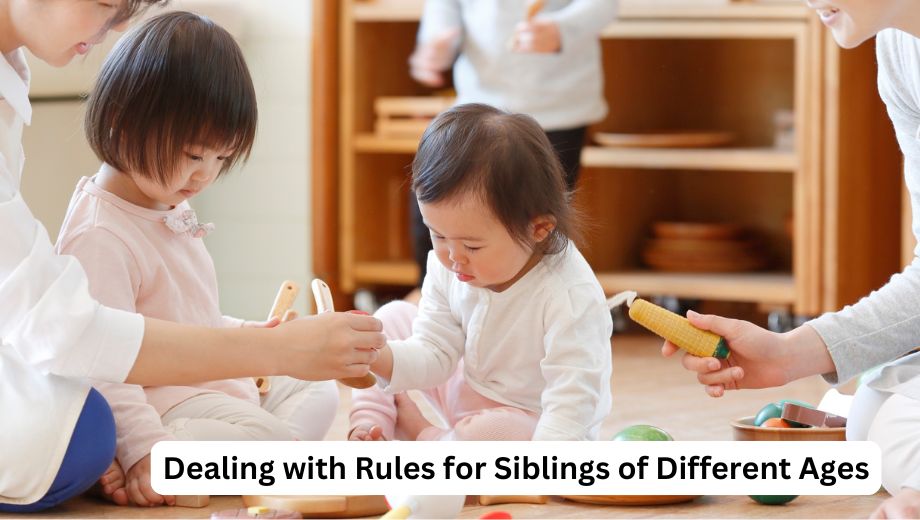
Dealing with Rules for Siblings of Different Ages
October 15, 2025
Dealing with different rules for siblings of various ages can be challenging, but it’s important to establish clear guidelines that take into account the developmental needs and maturity levels of each child. Here are some strategies to handle different rules for different-aged siblings:
1. Be Consistent with the Overall Principles
While the specific rules might differ based on age, the underlying principles (respect, kindness, fairness, responsibility) should remain the same. Ensure that all siblings understand that while the rules may vary, the goal is to promote respect and healthy relationships.
2. Tailor Expectations Based on Age
For example, the younger child may have simpler rules (like taking turns or using kind words), while the older child may have rules that reflect more independence (like respecting privacy or managing their own chores). Acknowledge that as they grow older, their responsibilities and freedoms will change, and make sure they understand this.
3. Clearly Explain Why There Are Different Rules
Take the time to explain why different rules apply to different ages. Help your children understand that older siblings may have more responsibilities because they are capable of handling more complex tasks, while younger siblings are still learning. This can reduce feelings of unfairness.
- Example: “Your older sister has more responsibilities because she’s able to handle them. You will have the same opportunities as you grow, but for now, we need you to focus on learning and playing.”
4. Create Flexible Rules for Shared Spaces
For shared spaces (like the living room or kitchen), try to create rules that work for everyone. For example, no one should interrupt others when they’re doing homework or personal activities. A general rule like “everyone must respect each other’s time and space” can be applicable for all ages but adjusted depending on their ability to understand and follow it.
5. Make Time for One-on-One Attention
One way to manage different rules effectively is to spend individual time with each child, especially the younger ones who might feel that they’re getting “less” attention. This gives them a chance to feel heard and reinforces the idea that their needs are also important.
6. Encourage Older Siblings to Model Behavior
Older siblings can be great role models for younger ones. Encourage them to set a positive example and be understanding if their younger siblings don’t yet follow the same rules. Praise the older child for being patient and considerate.
- Example: “I know it’s tough when your brother needs help with something, but I’m proud of how you’re being patient and guiding him.”
7. Use Positive Reinforcement
Acknowledge and reward good behavior. This is especially effective with siblings of different ages because it emphasizes that everyone’s behavior matters. You can use different forms of rewards based on their age—like a sticker chart for younger kids or extra screen time for older ones.
8. Set a Good Example
Parents and caregivers should set a good example by following the same general rules of respect, kindness, and fairness. When children see their parents following similar principles, they are more likely to feel motivated to follow them as well.
9. Use Separate Consequences for Different Ages
While all siblings should be held accountable for their actions, consequences should be age-appropriate. Younger kids might get a time-out or a temporary removal of privileges, while older kids might have a more structured consequence, such as losing access to a favorite activity or device. Make sure the consequences are clear and proportional to the behavior.
10. Foster Empathy Between Siblings
Teach your children to understand each other’s perspectives. For example, the older sibling might not always understand why the younger one is upset over something small. Helping them see each other’s points of view encourages cooperation and reduces sibling rivalry.
- Example: “I understand you’re frustrated because you can’t go out yet, but your sister has to finish her homework first. Let’s try to be patient and find something fun you both can do together while you wait.”
11. Family Meetings to Discuss Rules
Regular family meetings can be a great way to review the rules for everyone and address any concerns. It’s an opportunity for all siblings, regardless of age, to voice any frustrations or suggestions, and for parents to clarify any misunderstandings. This encourages a sense of fairness and involvement in the rule-setting process.
12. Adapt as They Grow
As kids age, they should take on more responsibility and have more freedom. Be flexible with the rules as they mature and their needs change. Acknowledge their growing maturity and involve them in decision-making, such as choosing household chores or negotiating screen time.
In summary, the key to dealing with different rules for different-aged siblings is to keep the lines of communication open, ensure fairness, and tailor the rules to each child’s developmental stage. With clear explanations, consistency, and respect for their individual needs, you can help foster a positive sibling dynamic while managing varying rules.