


Encouraging Independence Without Pressure in Young Children
September 30, 2026
Independence is one of the most beautiful skills we can nurture during the early years. When a young child puts on their own shoes, pours water into a glass, packs away their toys, or simply says, “I can do it!”, they are developing much more than a practical skill. They are building confidence, responsibility, problem-solving abilities, and a belief in themselves.
However, encouraging independence does not mean expecting children to manage everything on their own. True independence grows gradually, through encouragement, patience, and opportunities to try—not through pressure.
What Does Independence Look Like in Young Children?
For a preschooler, independence can be very simple:
- Choosing which activity they would like to do
- Putting their belongings in the right place
- Washing and drying their hands
- Feeding themselves
- Helping to tidy up after play
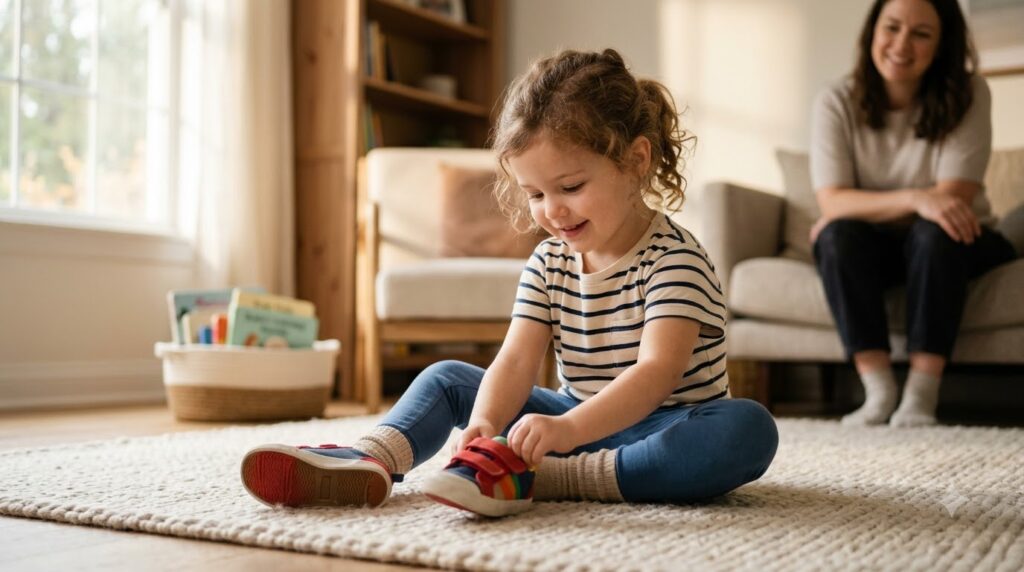
- Attempting to wear their shoes or socks
- Carrying their own bag
- Asking for help when they need it
These everyday experiences give children a sense of “I am capable.”
Give Children the Opportunity to Try
As adults, it is often quicker to do things for children. We may know exactly how to put on their shoes, pack their bag, or clean up a spill. But when we always step in, children lose opportunities to practise.
Instead of immediately helping, pause and give them some time.
You might say:
“Would you like to try first?”
“What could you do next?”
“I am right here if you need me.”
This communicates that we believe in their abilities while still making them feel supported.
Avoid Turning Independence into a Competition
Every child develops at a different pace. One child may happily dress themselves while another may still need assistance. One may confidently speak up in a group, while another may need more time.
Independence should never become a comparison between children.
Instead of saying, “Look, everyone else can do it,” we can say:
“You are learning to do this step by step.”
The focus should be on the child’s own progress rather than on how quickly they reach a particular milestone.
Allow Mistakes
A little spilled water, a shoe on the wrong foot, or a messy attempt at folding clothes is not a failure—it is learning in action.
When children are allowed to make mistakes in a safe environment, they learn to persevere. They begin to understand that finding something difficult does not mean they cannot do it.
Rather than correcting immediately, we can ask:
“Would you like to look at it again?”
This encourages children to notice, think, and try again.
Offer Choices, Not Pressure
Small choices can give children a wonderful sense of ownership.
Instead of:
“Put on your shoes now.”
we could say:
“Would you like to put your shoes on before or after you pack your bag?”
The adult still provides the boundaries, while the child gets an appropriate amount of control.
Independence Also Means Knowing When to Ask for Help
One of the most important messages we can teach children is that asking for help is not the opposite of independence.
A child who says, “I need help, please,” is communicating their needs and recognising their limits. That is an important part of becoming independent.
We can reassure them:
“You tried by yourself, and now you know when you need some help.”
At School and at Home
Independence becomes strongest when children experience consistent expectations in both environments.
At school, children can be encouraged to:
- Put away their work after an activity
- Return materials to their place
- Manage their personal belongings
- Help set up or tidy the classroom
- Make simple choices
- Take care of their environment
At home, families can offer similar opportunities through everyday routines such as dressing, eating, tidying toys, and helping with simple household tasks.
These tasks may take a little longer at first, but the confidence they build is invaluable.
The Adult’s Role: Step Back, But Stay Close
Encouraging independence does not mean leaving children to figure everything out alone.
It means finding the right balance between supporting and stepping back.
Sometimes a child needs encouragement. Sometimes they need a demonstration. Sometimes they need a little physical help. And sometimes they simply need us to wait.
Our role is to observe, understand what the child is ready for, and provide just enough support for them to take the next step.
A Gentle Reminder for Parents and Educators
This is a gentle reminder for all parents and educators that we don’t need to rush children towards independence.
Childhood is not a race.
When we give children time, trust their efforts, accept their mistakes, and celebrate their progress, we create an environment where independence develops naturally.
The goal is not to raise children who never need help.
The goal is to raise children who believe:
“I can try.”
“I can learn.”
“It is okay if I make a mistake.”
“I can ask for help when I need it.”
Because true independence doesn’t begin with “Do it yourself.”
It begins with:
“I believe you can try.